
The Fascinating History of Singapore’s Dragon’s Teeth Gate
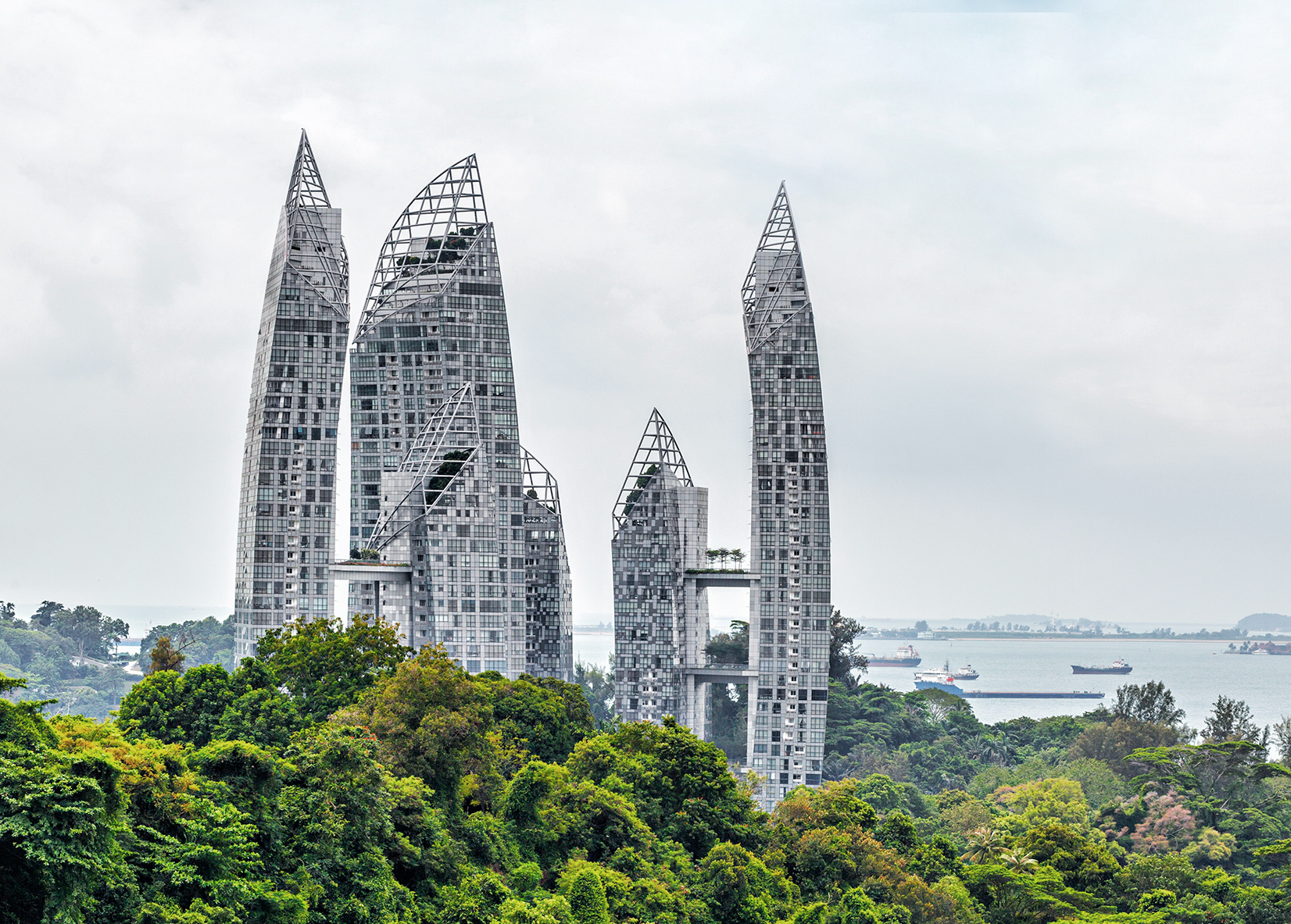
It’s said that Zheng He used it as a landmark to guide him during his seven voyages…
An elephant has ivory tusks, Buddha has the Buddha Tooth – so a dragon would have teeth too, right? Singapore is a dragons’ lair, so are there dragon teeth here? If so, where are they? Actually, what we mean by “dragon’s teeth” are tooth-shaped granite rocks or reefs. According to historians’ research, Singapore has not just one but two large dragon’s teeth, which form the Dragon’s Teeth Gate.
It is recorded that dsuring Zheng He’s seven voyages (1405-1433), the Dragon’s Teeth Gate (and other large rock formations) was used as a marker in navigating sea routes. In this sense, this “Dragon’s Teeth Gate” undoubtedly did exist, but their actual location is highly debated.
Though some historians believe the Dragon’s Teeth Gate was located in Singapore, other records indicate that the Dragon’s Teeth Gate should be further south from Pedra Branca; some even say that it should be among the Riau Islands Province and not in Singapore. To date, there’s still no consensus. If the Dragon’s Teeth Gate is in Singapore, is it located along the western end of Sentosa? Let’s investigate this from a feng shui perspective!
We begin from historian Gibson Hill’s version of events. According to him, Dragon’s Teeth Gate refers to the entrance of Keppel Harbour at the waterway between Labrador Park and Sentosa. Chinese navigators named this narrow waterway, with its two granite formations, Dragon’s Teeth Gate.
However, these two rocks were blasted away by the colonial government in August 1848 in order to allow easier passage into Keppel Harbour. With Dragon’s Teeth Gate gone, how can we prove their existence in Singapore? Well, it seems the Dragon’s Teeth Gate has reappeared!
What do I mean? Truth is, in order to better showcase Singapore’s history, the Singapore Tourism Board used “Dragon’s Teeth Gate” as a theme and installed an “imitation” Dragon Tooth Rock at Labrador Park. As I’ve mentioned, when a place accumulates enough “momentum”, corresponding “shapes” will begin to manifest. However, the legendary “Dragon’s Teeth Gate” should comprise at least one pair of dragon’s teeth. It seems the rumour that the Dragon’s Teeth Gate is in Singapore isn’t true after all.
 Yet, by some course of fate, there’s another set of even larger and more striking set of Dragon’s Teeth Rocks apart from the ones at Labrador Park. Yes, I’m talking about the eye-catching Reflections at Keppel Bay, which was completed in 2011. From every angle, the curved towers of varying heights are like a large-scale replica of the Dragon’s Teeth Gate.
“With enough momentum, shapes are formed”…this seems to be hinting that Singapore is where the Dragon’s Teeth Gate is located. Believe it or not – that’s up to you!
You’re probably going to ask this next: Does the “Dragon’s Teeth Gate” have any feng shui significance or purpose?
Like a lighthouse, the “Dragon’s Teeth Gate“ serves as a landmark that guides and stabilizes, allowing those at sea to stay on course. As one of Singapore’s entrances, the Dragon’s Teeth Gate also serves a defensive purpose! Even if Singapore is not the true location of the Dragon’s Teeth Gate, the current one marked by the man-made “Dragon’s Teeth Rock” is still an important monument.
Speaking of which, I can’t help but wonder: since Singapore has five “Mountain Dragons” and two “Sea Dragons”, does that mean there are more dragon’s teeth waiting to be found? We’ll see!
Addendum:
Mount Faber and Sentosa belong to the “Thunder Crab” feng shui formation and Sentosa, Pulau Brani, and the PSA container terminals make up the “Thunder Crab’s” pincer. Correspondingly, the architecture of Reflections at Keppel Bay also resembles the spiny edge of a crab’s shell! What do you think? Isn’t Mother Nature such an inspiration to mankind?
